
Explosives Transport 101
The regulations around transporting explosives are complex and involved multiple agencies. The US Department of Transportation (DOT) and their Pipeline and Hazardous Materials SafetyAdminsitration (PHMSA) set regulations at the Federal level. Your state DOT, highway patrol and local regulators often add their own system of regulations and permitting as well.
There are basically basically 3 options for explosives transportation:
1. Use a common carrier such as Fedex, UPS or a HAZMAT trucking company
2. Have your materials delivered straight to the jobsite by your powder vendor
3. Self-transport of loads not requiring placarding. (See CHP Publication 800 for California)
What does placarding mean?
You’ve probably seen many placarded loads on the highway. Fuel trucks are the most common, with the large “Flammable” DOT signs on the sides.
If you haul any quantity of 1.1 explosive material on a public highway, you are most likely required to placard. Lesser hazmat classes such as 1.4 and 1.5 over 1,000lbs also require placarding.
Placarding brings a number of requirements, including:
- Commercial Driver’s License (CDL) with HAZMAT endorsement
- $5M in commercial over-the-road liability insurance
- PHMSA Registration, permits and record-keeping requirements
- Driver and Employee Training Program
- DOT physicals for all drivers
- Random drug testing
- DOT inspection of all tractors and trailers
- Safety and Security plan
- State DOT, local permits, designated travel routes and other requirements that vary by location
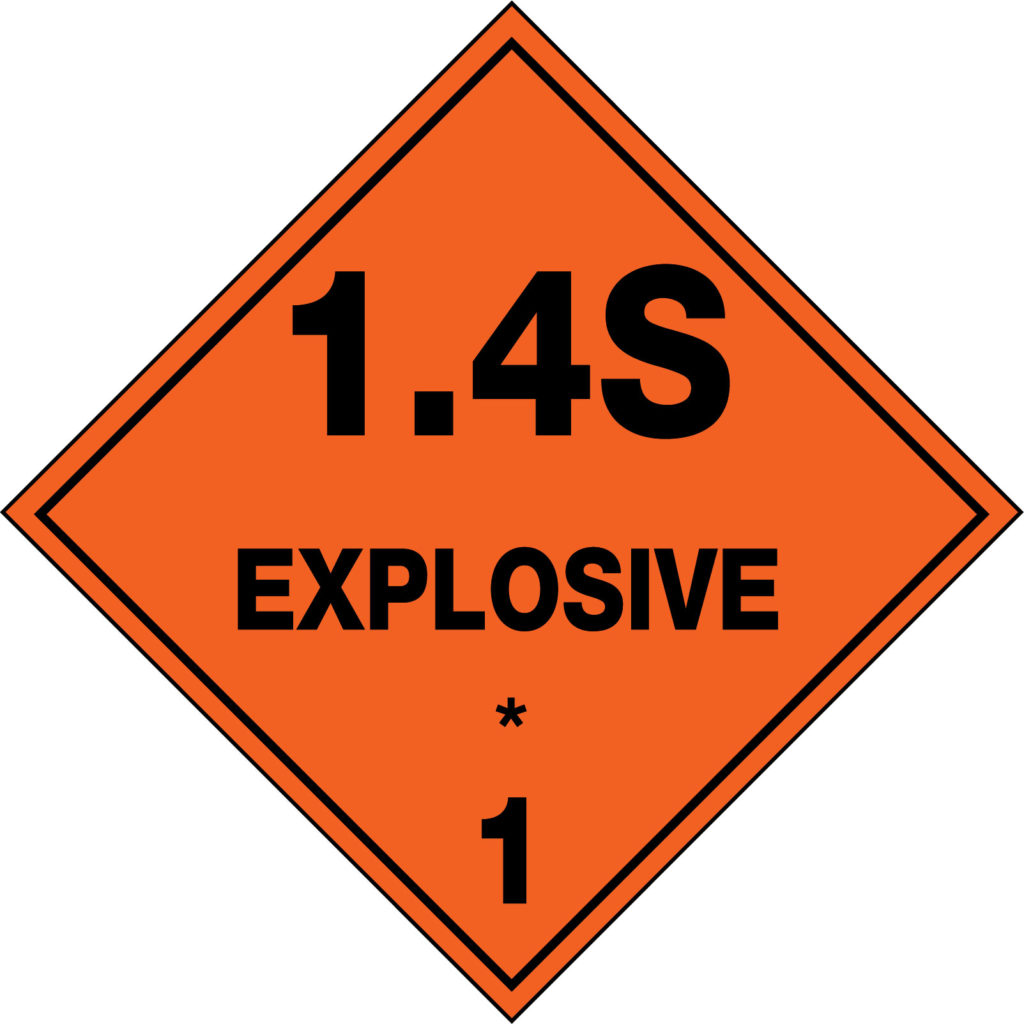
What can I carry unplacarded?
It is possible to carry up 1,000lbs of class 1.4 or 1.5 material in most states without triggering the placarding material. This includes interstate and “in-commerce” work as well.
Examples of 1.4 Material:
- Class 1.4S rock breaking cartridges
- Most detonators/blasting caps in 1.4B or 1.4S material
- Detonating cord 100gr/ft and under, gross weight under 100lbs. Must be packaged as UN0289.
Examples of 1.5 Material:
- ANFO
- Packaged blasting agents, such as class 1.5 emulsion sticks
Other Materials:
Binary explosives such as Kinepak that are mixed at the time of use
Staying Compliant
In our next posts, we will cover methods for staying legal while transporting, storing and using these materials.